Quick answer: You do not need a childcare background to become a maternity nurse. Gaye left a career in corporate travel and conferences, had no professional baby experience, and built one of the most in-demand international maternity nursing practices over 12 years. This is her story and a practical guide for anyone considering the same transition.
‘From Corporate Career to Maternity Nurse. Gaye’s Story’.
Watch: Gaye’s full interview how she left the corporate world 12 years ago and built an international maternity nursing career from scratch.
If you are at the earlier stage of exploring whether maternity nursing is right for you, start with our full guide: How to Become a Maternity Nurse in the UK. This blog focuses specifically on Gaye’s path, what it looked like in practice for someone with no professional childcare background, and what she would tell anyone considering the same transition.
If you’re wondering whether someone like you could do this
Most people considering maternity nursing as a career change have the same question underneath all the practical ones: is this actually realistic for someone with my background?
The answer depends almost entirely on the wrong things people assume matter most. You do not need to be a nurse or midwife. You do not need to have worked in childcare for years. What Gaye’s story shows is that the qualities that make a great maternity nurse, empathy, patience, professionalism, the ability to read a room and hold your nerve at 3am, come from all kinds of backgrounds. Including corporate ones.
Gaye spent most of her working life in international corporate roles, travel, conferences, events. She was good at it. She was also done with it. In 2009, watching the financial crisis reshape the industry she worked in, she made a decision that surprised people around her and defined the next decade of her life.
The moment she decided to reinvent herself
“I could see there were lots of changes and I thought. I need to reinvent myself again. I need to do something that’s good for me.”. Gaye
Her sister is a nurse and midwife. She had always loved the idea of working with newborns. But retraining as a nurse felt impractical at that stage of her life. What did feel practical was starting smaller.
She contacted an agency outside London and took a nannying role with a family who had a six-month-old. She stayed for a year.“I learned so much through the family,” she says. “I thought, yes, I really like this.”
That first year was deliberate. She was not trying to become a maternity nurse overnight. She was building the foundation, learning what working inside a family home actually felt like, what babies and parents actually needed, and whether she had the temperament for it.
The answer was yes. So she kept going.
How she found maternity nursing, by accident
The transition from nannying to maternity nursing happened in the way most good career pivots do: unexpectedly, through a specific job that changed everything.
A family she was connected to had premature twins. They had a maternity nurse, but needed someone to cover her day off. Gaye stepped in.
“That was my introduction to maternity nursing. And I thought this was the most wonderful job. I just built on that.”. Gaye
She did the Level 3 maternity nurse course. Then a breastfeeding course. A postnatal depression course. She started taking the odd night here and there with families while still nannying, building experience and references without burning bridges or taking a financial risk she couldn’t afford.
Then she approached a big London agency. She had roughly two years of experience at that point. Not a long CV by some standards. But she had references, she had specific newborn experience, and she had done the training. The agency gave her a chance.
Her first three agency placements were all premature twins.
“The easy jobs. I was thrown in at the deep end. But it was wonderful. It was an amazing experience.” Gaye
What the role actually involves day to day
Gaye works 24-hour placements, previously six days a week, now five, with longer breaks between bookings. She has worked in Barbados, Switzerland, South Africa, the US and across Europe. She is, as Emma says in the interview, extremely hard to get hold of because she is always booked.
Her day typically starts between 6 and 7am, changing the baby, taking them to the mother for the first feed of the day, running through the night’s details. She keeps a diary for every family: feeds, sleep times, nappy changes, anything worth monitoring. She teaches as she goes.
“I'm in the background ready to help. But I let the mother sort of I like to teach her and empower the mother.” Gaye
She involves fathers. She recognises when a mother is overwhelmed and adjusts her approach accordingly. She knows when a baby’s feeding difficulty might indicate something medical and knows when to say “I think we should get this checked by a paediatrician” rather than guessing. She explains sleep biology to parents, awake windows, circadian rhythm, developmental norms , in conversation, not in lectures.
She also has a filter she applies before every booking now, built from early experience of getting it wrong.
“I went into one or two families and I thought maybe I can change them. And then I thought, no. Now I'm a lot more discerning. I make sure that the family's values are aligned with my values, because I have a very gentle approach..” Gaye
She tells every prospective family from the first WhatsApp message: this is my approach. If they want a baby sleeping through the night in two weeks, she is not the right fit. That clarity, she says, makes every placement work better.
Why her corporate background turned out to be an advantage
This surprises people, but it shouldn’t. A career in international corporate work builds skills that are directly transferable to high-end private maternity nursing: discretion, professionalism, the ability to read clients, adaptability across different cultural contexts, and, crucially , a network.
When Gaye’s former colleagues started having babies and realised she had retrained as a maternity nurse, referrals followed naturally. Some of her most valued clients came not from agency listings but from people she had worked alongside years earlier who trusted her before they ever hired her.
The corporate skills also shaped how she manages the business side of the role, contracts, rates, international arrangements, self-employment. Things that can overwhelm practitioners who have come only from childcare backgrounds felt familiar to her from years of managing professional relationships and projects.
What it actually takes , and what Gaye wishes she’d known
Gaye is honest about what made the difference over 12 years. Not a clinical background. Not being young. Not being from London. What mattered was a genuine love of the newborn period, the emotional steadiness to work intensively inside a family’s home, and a professional discipline her corporate career had already built.
But she is equally clear about something many people underestimate: you cannot walk into maternity nursing without hands-on newborn experience. Gaye spent roughly two years building that foundation before approaching a major London agency. She nannied, did temporary cover, took on nights alongside other work, and built specific newborn references before she was in a position to be put forward for professional placements. That was not a shortcut. It was the work.
“My first job looking after a baby picking up one of the twins I was petrified. Even though I'd held babies before, this is suddenly a professional environment. You are looking after somebody else's baby. You have to take a very gentle approach and remember that this is completely new.” Gaye
The newborn placement scheme Babyem runs, exists precisely for this reason. It gives graduates a structured route to that essential newborn experience with real families, so they are ready when they approach agencies.
Gaye has also continued adding to her knowledge throughout her career, including completing Babyem’s Holistic Sleep Coaching Program, which deepened her ability to talk parents through infant sleep biology, awake windows, circadian rhythm and developmental norms as an integrated part of her day-to-day work.
“Even at this stage of my life, I’ll continue working as long as I possibly can.” Gaye
The path Gaye would recommend to someone starting now
She is clear on this, drawn directly from her own experience and the mistakes she made early on.
- Get some hands-on experience with babies first , a placement, voluntary work, covering for someone. Not because you need a long CV, but because you need to know whether you can actually settle an unsettled baby at 2am and still be calm and professional by 6am.
- Do proper, accredited training , not just to learn the content, but because agencies check it and families increasingly ask. Gaye did the Level 3 maternity nurse course and has continued adding to her knowledge throughout her career.
- Be honest about your experience level at interview and let your rate reflect it early on. “Be honest. It pays off later,” she says.
- Start with agencies . They handle the client-facing introduction, they back you up when things get complicated, and they help match you with the right families for your experience level.
- Know your approach and communicate it from day one , the families who want what you offer will find you. The ones who don’t will self-select out early, which saves everyone time.
Ready to explore training?
If Gaye’s story resonates, the practical next step is understanding what training actually involves and which level is right for your background.
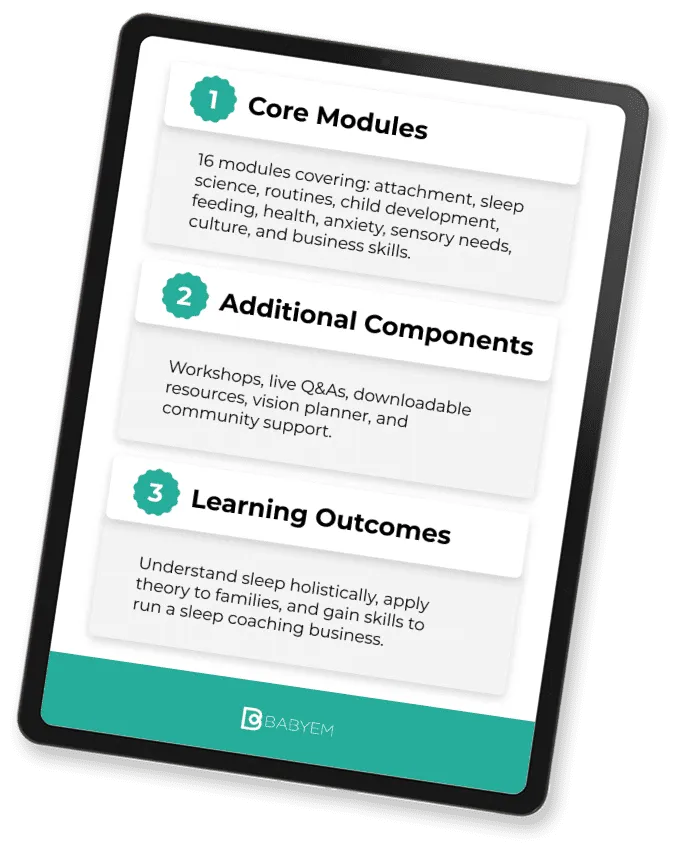
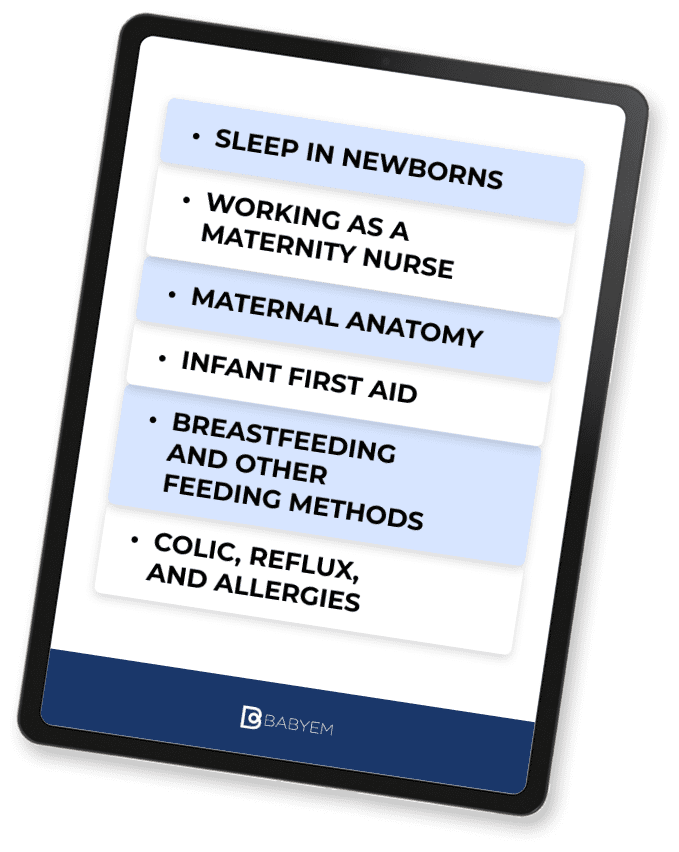
Babyem’s maternity nurse training is OCN accredited at Level 3 and Level 4 , and the training Gaye herself built her career on.
- Online Maternity Nurse Training — fully self-paced, available worldwide
- London Blended Maternity Nurse Training — online learning plus two in-person training days in London
Not sure which level is right for you? Download the free guide , 9 Things to Consider Before Becoming a Maternity Nurse , or read the full step-by-step guide: How to Become a Maternity Nurse in the UK.
FAQs
Can I become a maternity nurse if I have no childcare background?
Yes. Gaye came from 20+ years in corporate travel and conferences with no professional childcare experience. What matters is a genuine affinity for working with newborns and families, the willingness to get hands-on experience, and proper accredited training. Many successful maternity nurses come from entirely unrelated backgrounds.
Do I need to be young to retrain as a maternity nurse?
No. Gaye made the transition in her 40s and is still fully booked more than 12 years later. The role values experience, emotional maturity and professional judgement, qualities that often come with age rather than despite it.
How long does it take to go from training to first paid placement?
This varies, but Gaye’s timeline was roughly two years from first contact with an agency to working consistently as a maternity nurse through London placements. Building references through voluntary or lower-paid work first is the most reliable route to agency registration. Some practitioners move faster if they have existing baby-related experience.
Do I need to live in London to work as a maternity nurse?
No. Gaye has worked across Europe, in the US, South Africa, Barbados and Switzerland. Many maternity nurses work nationally and internationally. London has a high concentration of private families but the role is not geographically restricted.
Is the gentle, responsive approach Gaye describes mainstream now?
It is increasingly what families ask for. Gaye is explicit that she screens families before accepting bookings to ensure their approach aligns with hers. Families who want a rigid routine from day one or a baby sleeping through the night in two weeks are not her clients. Finding families whose values match yours is a professional skill in itself and one that takes a few early placements to develop.
What approach does Babyem’s training take?
Babyem’s maternity nurse training is built around what our founder Emma describes as being ‘gentle, responsive and evidence-based.’ This means training that is grounded in current research on infant development and sleep, that supports parents rather than replacing them, and that equips you to work with families who want a practitioner aligned with their own values rather than one who imposes a fixed method. If you have a gentle, responsive approach , and many people drawn to this work do , Babyem’s training is built specifically around that way of working.
Can I become a maternity nurse if I already work as a nanny?
Yes and this is one of the most common transitions. Gaye moved from nannying into maternity nursing by starting with nights and short bookings alongside her existing work. Agencies look at your newborn experience specifically, not your overall childcare history, so it is worth building targeted newborn references before approaching them.
In summary
Gaye left a demanding corporate career with no professional experience of babies or childcare. She is now one of the most sought-after maternity nurses in the field, working internationally for 12 years and still fully booked.Her path was not overnight and it was not without uncertainty. But it was deliberate, practical and built on real foundations: hands-on experience first, proper training, honest early interviews, starting at a rate that reflected her experience, and working with families whose values matched hers.
That path is available to anyone with the right temperament, the right training and the willingness to build it properly.