
Know how to prevent, detect and manage what's going on
You will explore what the underlying causes of these distressing conditions are, and how you can manage and reduce symptoms, so baby can be content again.
This course is for you if you support families with babies who are suffering from colic or reflux, or showing signs of lactose intolerance, cows' milk protein allergy and other food allergies and intolerances.
Reflux and cows' milk allergy are often misdiagnosed and misunderstood. We give you the most up-to-date information and practical application strategies to better support the families you work with, in a holistic, gentle and effective way.



When it comes to colic, reflux, allergies and supporting families with an unsettled baby, one of the biggest misunderstandings is that colic and reflux are seen as a cause of unwellness that needs to be treated.
However, extensive studies now show that colic and reflux are actually symptoms with potentially unknown causes.
Seeing them incorrectly as causes has resulted in a raft of industry 'quick fix' solutions and practices, rather than trying to discover and help with the root underlying causes.
When parents have a very upset baby struggling with colic and reflux it can negatively affect the bonding process. And when they try one of these quick fixes, which often don't work because they don't address the root cause, it leaves them feeling even more distressed and anxious.
We believe it is far better to take a holistic approach for infants struggling with colic, reflux and allergies. As one of our students, we want you and the families you help to benefit from our industry-leading teaching.
Rather than rushing in with a quick fix, we show you how to use empathy, gentle but focused questions, and a lot of listening to find and address the root cause, instead of trying to individually treat or manage those symptoms.
We also lean on the evidence base and the most current established guidelines, so you know you're supporting families with what really works. We don't just teach you what to do, we teach you why, so you can feel confident you are giving your clients the best possible support.
You will explore what the underlying causes of these distressing conditions are, and how you can manage and reduce symptoms, so baby can be content again.
Practical steps backed by evidence and case histories from specialists with decades of experience in infantile crying, allergy and immune disorder. This includes managing symptoms in all milk-fed babies: medications, other prescription products, dietary changes and a range of other strategies.
The newest spheres of scientific understanding, including the microbiome, early neurological development and epigenetics, plus the existing understanding of allergy and immune disorder, so you understand the background of the symptoms.
Nannies caring for younger children who are looking to develop their knowledge of infant allergies, reflux and colic, or who want to pursue a career caring for babies.
Nursery nurses, childminders and health professionals supporting families with babies in a childcare setting, home setting or clinic, who want to deepen their evidence-based practice.
Maternity nurses and doulas who want current evidence-based practice, and strategies to support clients and their babies with new and unresolved issues.
Professionals who already have baby experience and want to advance their knowledge in the care of babies, with a particular interest in infant allergies, reflux and colic.
Around 6 to 8 hours of online learning. Every module is also available as audio you can download and listen to on the go.
To get the foundations of baby's wellbeing right, it's important to understand the infant gut. We explore human evolution and survival, plus breast milk production and the immune system. You'll learn what's normal and expected, how evolution means we've deviated, and what is therefore abnormal and unexpected.
We look at the historical and current definitions of colic, reflux and regurgitation, plus the evidence and guidelines on what is normal and not normal when it comes to lactose intolerance and cow's milk protein allergy.
You will understand the difference between symptoms and causes of allergy and intolerance, and how they interplay in the infant. We explore cow's milk protein allergy, plus the other allergens which can often be overlooked, and how they might be interrelated.
You will understand the medications that might be used and the specialist infant formula that some babies are prescribed, how they work and when they are useful, or not. You'll also look at how the mother's diet can impact these issues and how to support the continuation of breastfeeding where appropriate.
This module brings everything together to help you understand non-medical prevention, and the management and treatment options families can use. You'll look at how to do a differential assessment for each family based on a holistic view of the feeding history, symptom history and family history. You will have a solid understanding of what questions to ask to support the family and what they want to achieve from working with you.
Enrol today and you also get instant access to four bonuses, designed to help you give the families you work with an extra level of professional support.
Searching online and being bombarded with mostly unhelpful suggestions quickly leads parents to confusion, overwhelm and feeling hopeless. This checklist cuts through the information overload to find a quick possible answer to their baby's distress, giving simple answers to when and why babies most often cry, so parents feel more in control.
An incorrect diagnosis can lead to unnecessary medication, or parents being persuaded to stop breastfeeding or introduce solids early with no clinical indication. This checklist helps aid the correct identification of reflux so it can be managed properly, and the family can care for their regurgitating baby with confidence.
Allergy may be the main cause of an inconsolably distressed baby, and is often misdiagnosed as simply colic. This checklist helps you judge whether the symptoms could be due to an allergy, and can also be used to identify family history, since if parents or siblings are allergic the next baby is at increased risk.
A walkthrough of how to use each checklist so your clients are confident in the help you're giving them, plus when to seek additional help from specialists.
£172 of bonuses, included free with every place.
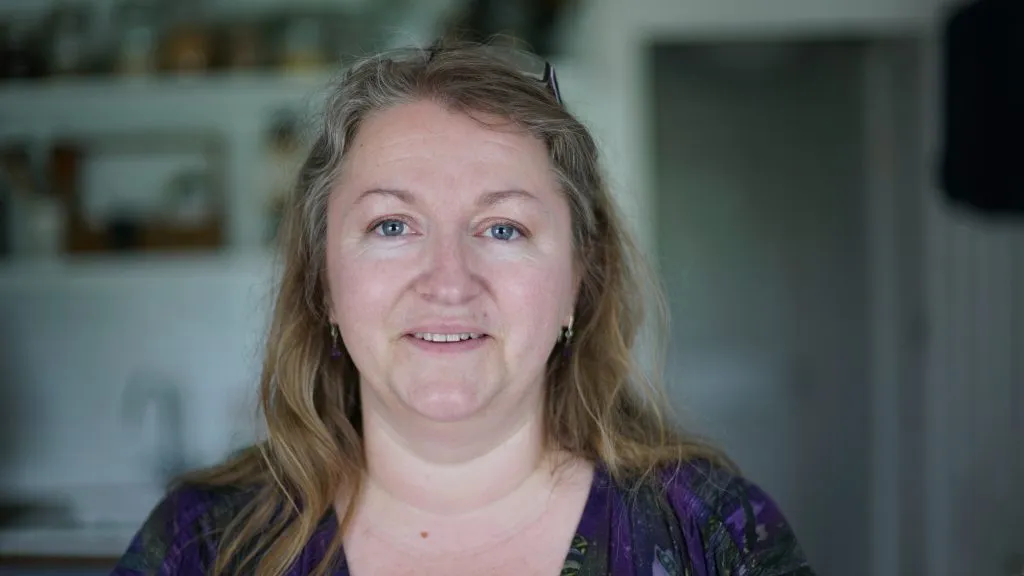
Shel is an International Board Certified Lactation Consultant with extensive experience working within the NHS in research, training and project management, as well as in her own private practice assisting mothers and babies with feeding issues, and in the tertiary sector with various national organisations.
She is the author of Why Formula Feeding Matters and has worked on the Cochrane systematic reviews on infantile colic. Shel was Vice-Chair of the UK Association of Milk Banking until 2024 and Chair of the Communications Team for the Lactation Consultants of Great Britain.
You'll have ongoing support from Shel and our other experts, helping you not only during the course, but afterwards when you're working with clients.
shelbanks.co.ukWork through it on a laptop at home, or from your phone between clients. The audio version downloads too.
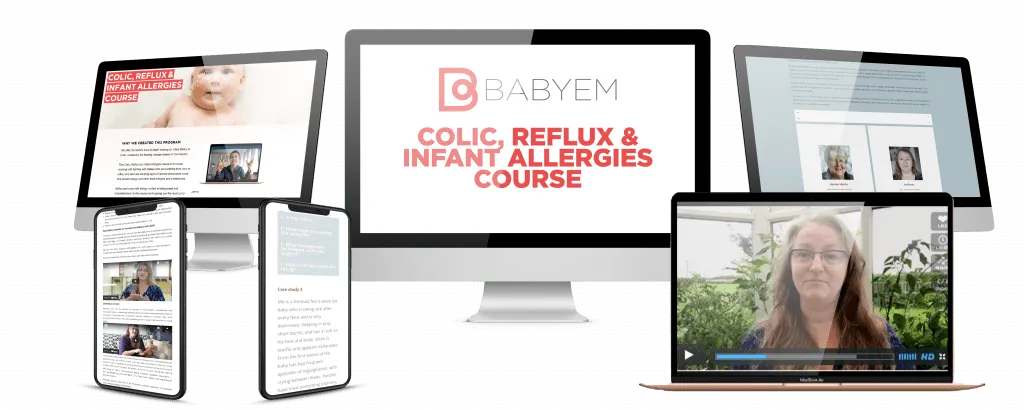
Every option includes the full course, all four bonuses, lifetime access and ongoing mentorship. The difference is whether you take the accreditation.
Not sure which to pick? Level 3 is A level standard, level 4 is degree level. The course content is identical; the accredited routes add an essay-based assignment and a formal qualification. If you're not sure, you can always start non-accredited.
We want you to feel comfortable with your investment. If you join and within 14 days decide the programme isn't right for you, request a full refund and we'll wish you well for the future.
I absolutely loved the colic, reflux and infant allergies course. It really helped to have that specialist knowledge and it has made me much more confident moving forward working with the families I support. I highly recommend it.
 Lucy Webber
IBCLC & Registered Midwife
Lucy Webber
IBCLC & Registered Midwife
I am a nurse and midwife and there was a lot of information in this course that I had no clue about! In my experience there is so much controversy over medicating reflux and colic and I would honestly say this should be a compulsory course for all maternity nurses.
 Shayne Wells
Registered Midwife & Maternity Nurse
Shayne Wells
Registered Midwife & Maternity Nurse
This is a topic that is so needed and there is so little evidence based research out there for parents. I definitely feel more confident now supporting families whose infants have reflux.
 Laci Tang
Nanny
Laci Tang
Nanny
We estimate approximately 6 to 8 hours to complete the online learning material. If you have opted to complete the accreditation, we estimate approximately 20 to 30 hours of learning.
We understand, and that's why we have generous payment plans where you can pay in 2 instalments, which makes the online Colic, Reflux & Infant Allergies course really affordable.
CERPs are Continuing Education Recognition Points, especially for lactation consultants.
This is the only colic, reflux and infant allergies course in the sector that has been awarded 6.25 L-CERPs.
Yes. We want to make it easy for you to digest all the information.
Each module consists of a number of lessons, and most lessons have sub-lessons. After each lesson you complete short multiple-choice questions. You need 80% in each lesson to pass, but you can retake those tests. If you don't pass, you keep retaking until you do.
To receive the OCN accreditation you will need to complete the essay-based assignment. The assessment details can be accessed on the course platform. You are given 7 weeks to complete it. Each question is approximately 250 to 300 words and relates to the topics covered during the course.
Once completed you send the assessment back to us, and your work is marked and then assessed by Open College Network. If there are any amendments to be made we let you know by email, or schedule a call if required, and you are given extra time to make them. Once your work has been successfully verified you receive your qualification through Open College Network.
You are welcome to complete the course and not complete the assessment. If you choose to do this, on successful completion of all of the multiple-choice questions you will be given a certificate of achievement (non-accredited).
This course does not give you the qualifications to make a medical diagnosis. It is designed to enable you to give the right information and support to families who experience symptoms of colic, reflux and allergies, in order to improve those symptoms.
Families with unsettled babies are often distressed and wondering how to help settle their baby in a gentle, non-invasive way. With so much misinformation out there it's easy to understand why families can be confused and overwhelmed when they have a baby experiencing pain and discomfort.
The course will arm you with enough knowledge and information to give confident and empathetic support to families who are struggling, to help them have a better understanding and hopefully improve their situation.
Whilst there is no criteria for calling yourself a specialist in this area, do be mindful that there are others who have worked in this field who have decades of experience supporting families with these conditions. It's important that you feel confident in the support you are giving. This course will equip you with the foundations for providing good support to the families you work with, and help you on your pathway to becoming a specialist.
This course is designed to enable you to pass on your knowledge to the families you support. You may be able to deliver this information in a class or group setting.
The quickest way to get your questions answered is to post them in the Facebook group, which is there specifically to support you with course queries and ongoing questions when working with clients.
If you have any other non course-related queries regarding payment, tech or deadlines, please contact the Babyem team and we can happily help you.
You are required to have a good level of conversational English. The course is taught in English and assignments must be completed in English.
You will also need:
Five modules, four bonuses worth £172, ongoing mentorship from IBCLC Shel Banks, and lifetime access. Backed by a 14-day money-back guarantee.
See enrolment options → From £200 · payment plans available at checkout